
Carpal Tunnel Syndrome
What is Carpal Tunnel Syndrome?
A type of nerve pressure in the wrist caused by the narrowing of the carpal tunnel. The carpal tunnel is a passageway containing the median nerve, which controls movement and feeling in the hand.

What Causes Carpal Tunnel Syndrome?
Carpal Tunnel Syndrome may be caused by the following:
- Repetitive motion, such as typing or any action that requires your hands to be lower than your wrist
- Certain medical conditions, like hypothyroidism, obesity, diabetes or arthritis
- Pregnancy
Carpal Tunnel Syndrome Symptoms
If you are suffering from tennis elbow, you may experience the following symptoms:
- Wrist pain
- A burning or tingling sensation in the hand and fingers
- Numbness in the palm of the hand and fingers, particularly during the night time
Patients with more severe cases may experience the following symptoms:
- Slower nerve impulses
- Numb fingers
- Loss of strength and coordination, particularly with the ability to use thumbs or to pinch
- Permanent muscle damage and loss of function
Carpal Tunnel Syndrome Diagnosis
Our wrist specialists can determine if your wrist pain is caused by Carpal Tunnel Syndrome. Request an appointment to be seen by an Oneida Health wrist specialist as soon as possible. Our specialists will start with a physical examination during which they will perform a series of tests to determine whether you have Carpal Tunnel Syndrome. If necessary, your doctor may order additional tests such as a nerve conduction velocity test, electromyogram, MRI, X-ray, or ultrasound.
Carpal Tunnel Syndrome Treatment
If it is determined that you are suffering from Carpal Tunnel Syndrome, our wrist specialists will develop a treatment plan tailored specifically for you, which may include some of the following:
- Ice
- Rest
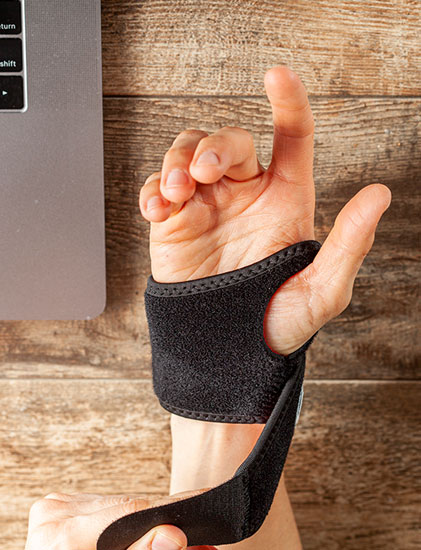
- Wrist braces
- Taking routine breaks for hand stretches can help with wrist pain related to carpal tunnel.
- Making changes to your work station or workday routine
- Alternating between hands when working on certain tasks
- Alternating between hands when working on certain tasks
- Maintaining good posture – avoid rolling your shoulders forward
- Steroids
- Physical Therapy
- Yoga
- Surgery, if necessary